04 / 04
Analysis · Circulation
Measuring the contribution of communications
Leadership should be able to explain how communications serves business objectives: gaining consideration for an expertise, making a choice understandable, developing a relationship or supporting a decision. Evaluation connects resources with intended effects and observations suited to each audience.
Read the expertise · Circulation of ideasDefine what should change for the people concerned
If the company wants consideration for a new capability, a general increase in visibility is an insufficient objective. It needs to establish who should know about that capability, what they do not yet understand and where it could matter in a decision. Evaluation begins alongside strategy, with teams who know those audiences.
AMEC’s Barcelona Principles 4.0, published in 2025, connect evaluation with objectives, stakeholders and all relevant channels. They distinguish activity, effects and wider contribution. This professional framework helps choose questions for the review; it does not provide a universal conversion rate between visibility and influence.
Consider an illustrative B2B case: a company wants recognition for its ability to maintain business continuity. The evaluation can examine understanding of that capability among relevant decision-makers, their questions and the use of evidence in comparisons. Traffic tracks one means; the other observations examine the ambition.
Build measures that support comparison
Perceptions of a capability can be examined through surveys or interviews with a defined population and stable questions. The aim is to understand the associations people make with the company and the reasons they give. Existing customers and prospects have different relationships with it; combining them without distinction loses strategically useful information.
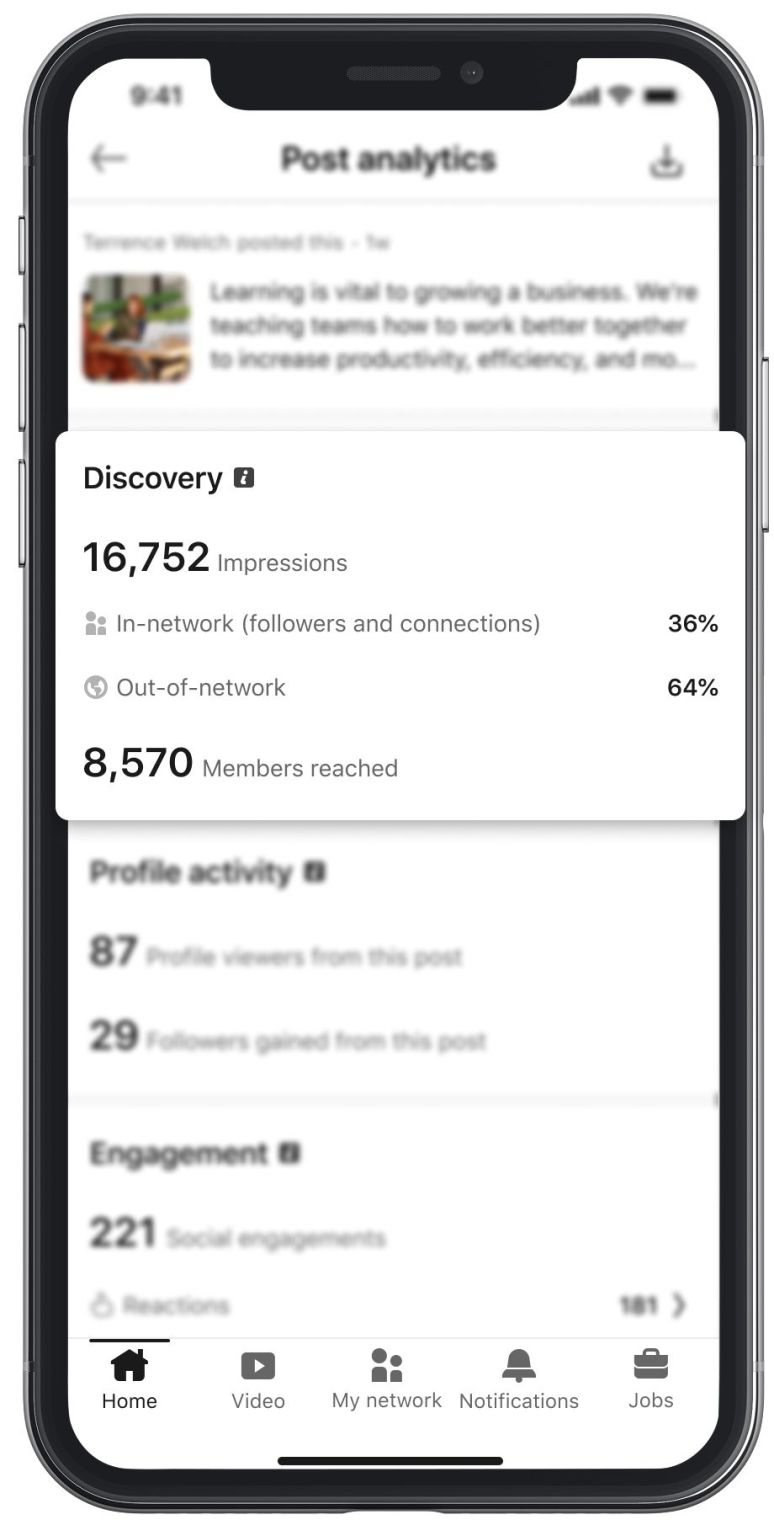
Distribution data retains its role: audiences reached, cost, frequency and pages consulted. Its scope and collection method should support interpretation over time. A change in consent or campaign design may alter a series without a corresponding change in reputation.
Quantitative findings should be considered alongside qualitative evidence. An interview may explain a difficulty without measuring its prevalence. A survey may locate an association without explaining how it formed. Combining them helps identify what to work on next.
Document specific uses of the content
An enquiry mentioning an article, a study reused in a presentation or a recurring question in sales meetings provides another kind of evidence. Keep the document, date and context where these can be used.
A critical citation can be informative; an automatic share may add little. Explain what was used and in which situation rather than adding different events together as a single influence measure. Collection can be part of existing discussions with sales and account teams, including unfavourable findings.
Make the next editorial choices explicit
A review should consider results in relation to the effort involved. An analysis with few readers may be useful to a small group of decision-makers; the question remains whether that use justifies the cost or another format could serve it better. A highly visible series may deserve continuation for awareness without being described as evidence of commercial preference.
Communications leaders can then propose a decision: develop stronger evidence, reach an underserved audience, strengthen relationships with intermediaries or stop work whose value remains limited. Measurement becomes a way to improve allocation and contribution instead of searching for one number to summarise influence.
For each measure in the review, ask which decision would change if it rose or fell. If nobody can answer, it remains descriptive. It may be worth tracking, but should not determine the next period’s resources on its own.
References
Sources and scope
-
AMEC, Barcelona Principles 4.0, 2025: professional evaluation framework, principles 1–7.
Read the source
Further reading
Extend the question
- 01 When the metric starts deciding the contentA metric becomes strategic when it directs resources and editorial choices. If citation count becomes the objective, teams may favour easily reused material over questions that matter to the market. Evaluation should make that effect on the work open to examination.
- 02 The 95/5 rule: reaching future B2B buyersWhen a buying project begins, some suppliers are already familiar. That is the practical point of the 95/5 rule: marketing has work to do before buyers compare offers. The ratio is an estimate. The more useful questions concern what future buyers need to know about the company and when they might encounter that information.